
Fernando Vela

A Lifelong Relationship with Tibetan Calligraphy

My relationship with Tibetan calligraphy began at the age of eighteen, when I first encountered the Buddhadharma. From the very beginning, I was deeply struck by the extraordinary beauty of the Tibetan written language. Its graceful forms, intricate structures, and remarkable visual character captivated me, and I made a personal commitment to learn it.

At the time, resources for studying Tibetan were exceedingly scarce, particularly for someone learning independently. Nevertheless, my enthusiasm was unwavering. I was fortunate to receive the encouragement of my teachers, Venerable Khenchen Palden Sherab Rinpoche and Venerable Khenpo Tsewang Dongyal Rinpoche, who warmly supported my interest in learning the language. Their encouragement helped nurture what would become a lifelong appreciation for Tibetan script and its artistic possibilities.

me-w-khenpo
blank
20261007_055820

Between Tradition and Creative Expression

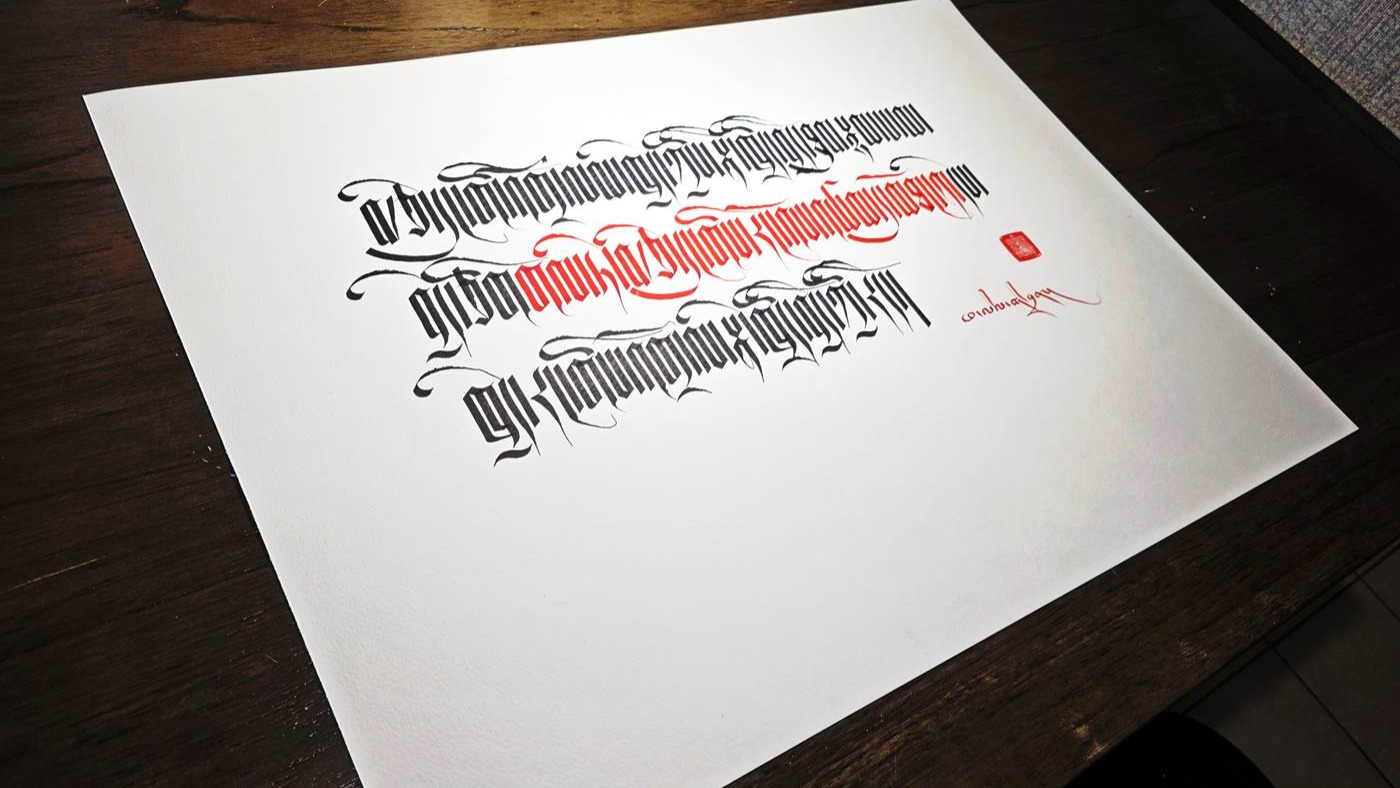
My work encompasses both traditional Tibetan calligraphic forms and more contemporary, experimental interpretations.

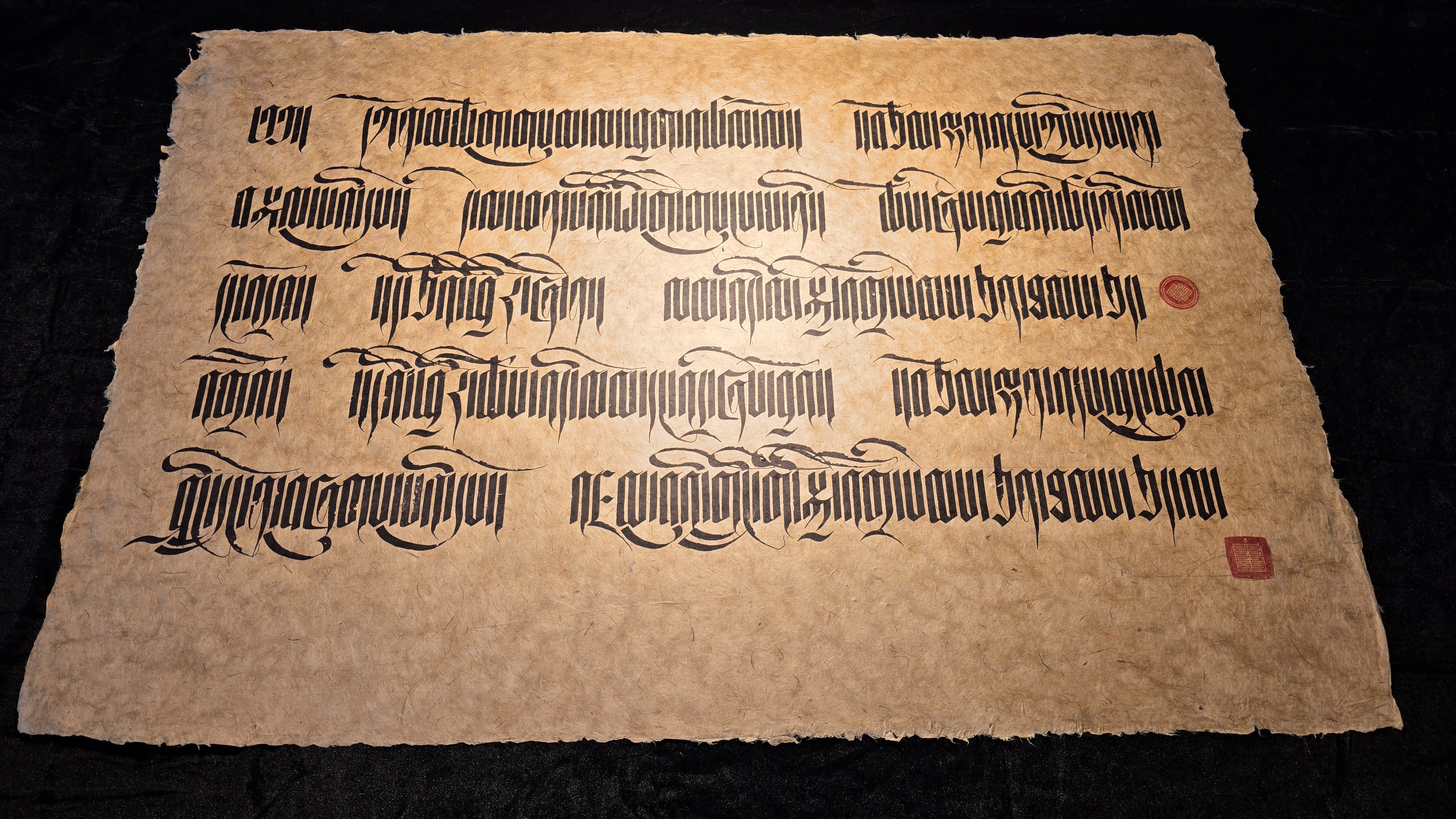
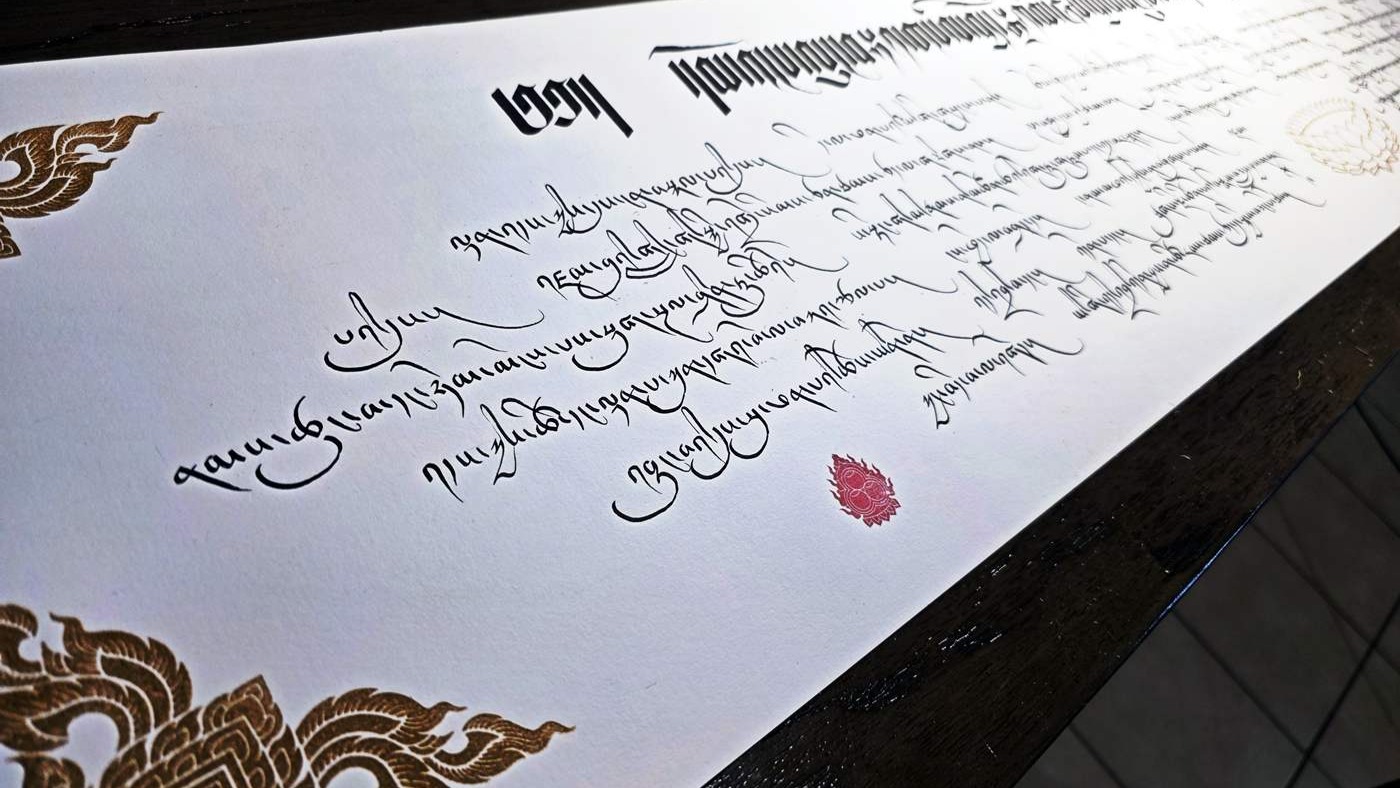
I have a particular appreciation for classical scripts such as Tsugring and Petsug, in which I place considerable emphasis on traditional proportions, structural integrity, and the relationships between individual letterforms. I find great satisfaction in studying the principles that give these scripts their distinctive character and in striving to honor the elegance and discipline of their traditional forms.

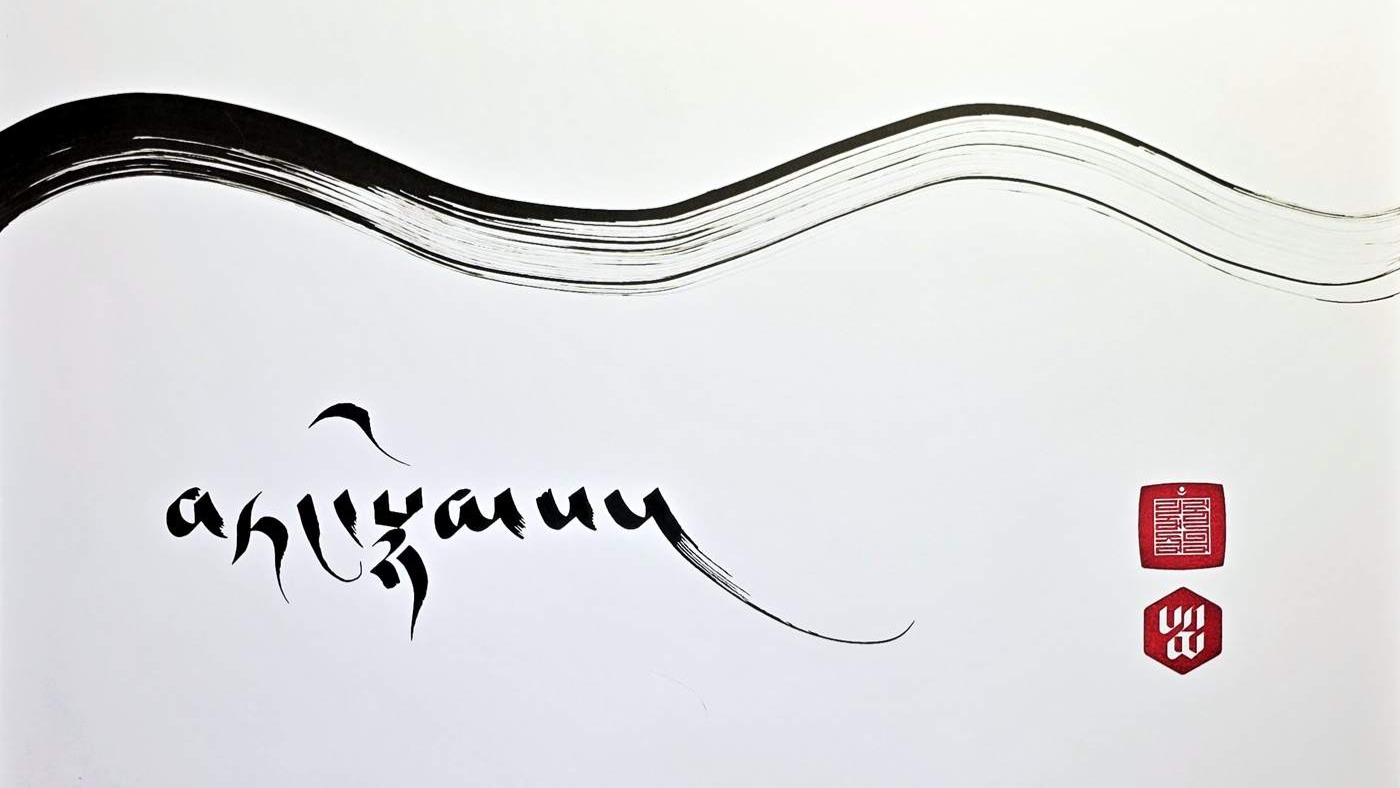
At the same time, I enjoy exploring the expressive possibilities that emerge when those conventions are loosened. Some of my work ventures beyond established forms, experimenting with composition, movement, proportion, and visual rhythm. I see these explorations not as a departure from my appreciation of tradition, but as another way of engaging with the beauty and versatility of Tibetan writing.

Giving Form to the Dharma

Among the most rewarding aspects of my work is the opportunity to create artistic interpretations of sacred Buddhist texts.

There is something deeply meaningful to me about bringing together the wisdom expressed in these writings and the visual beauty of the script in which they have been preserved for centuries. Through choices of form, composition, texture, and movement, I seek to give each piece a character that resonates with the text it represents.

My hope is that these works offer more than an aesthetic experience, that they also invite a moment of reflection, contemplation, or appreciation for the profound literary and spiritual heritage of Tibet.

Sambhota Studio is an expression of this lifelong relationship with Tibetan language, calligraphy, and the Buddhadharma. It is a place where my respect for traditional forms meets my desire to explore their creative possibilities, and where the simple act of writing continues to be a source of discovery, inspiration, and joy.

20261029_100606
blank
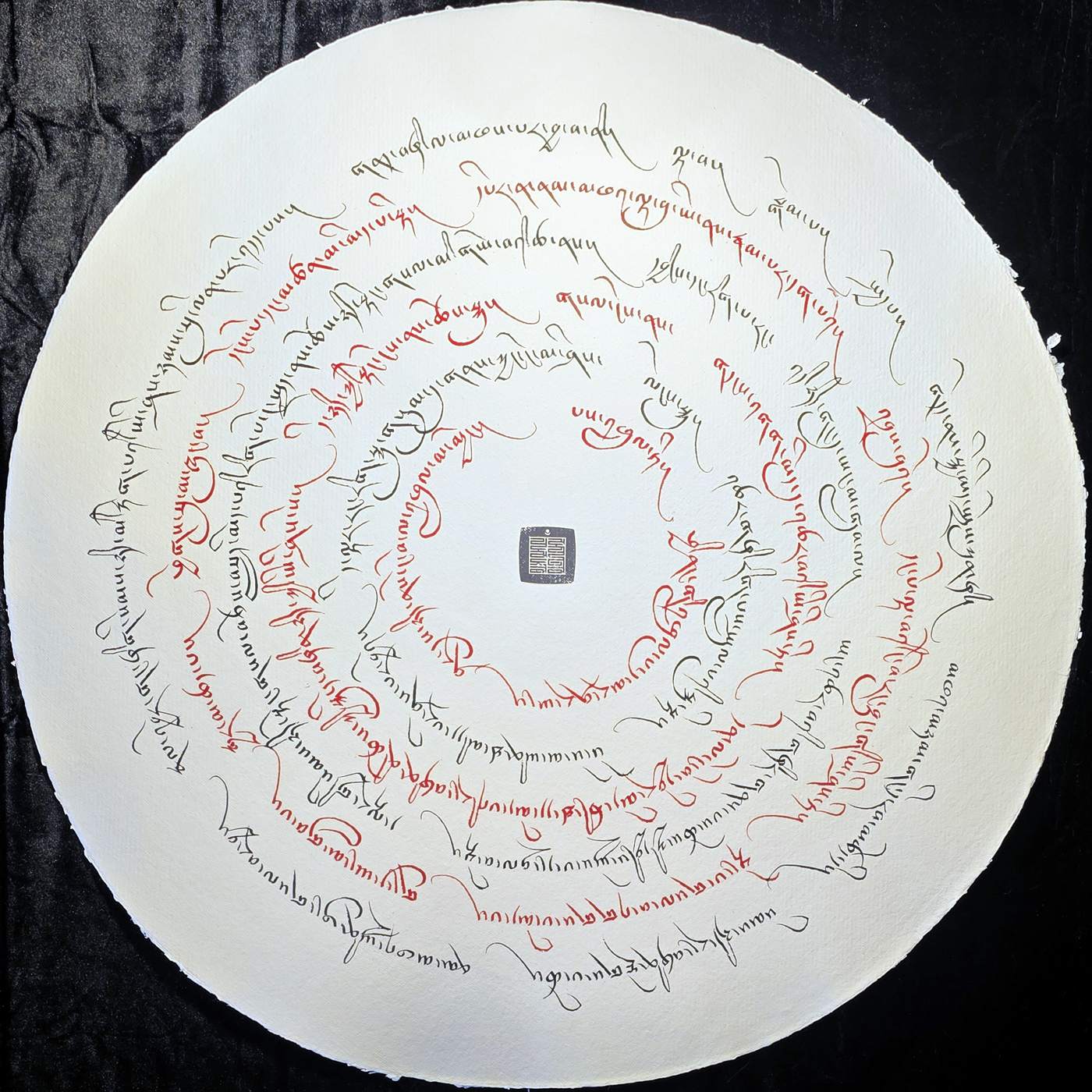
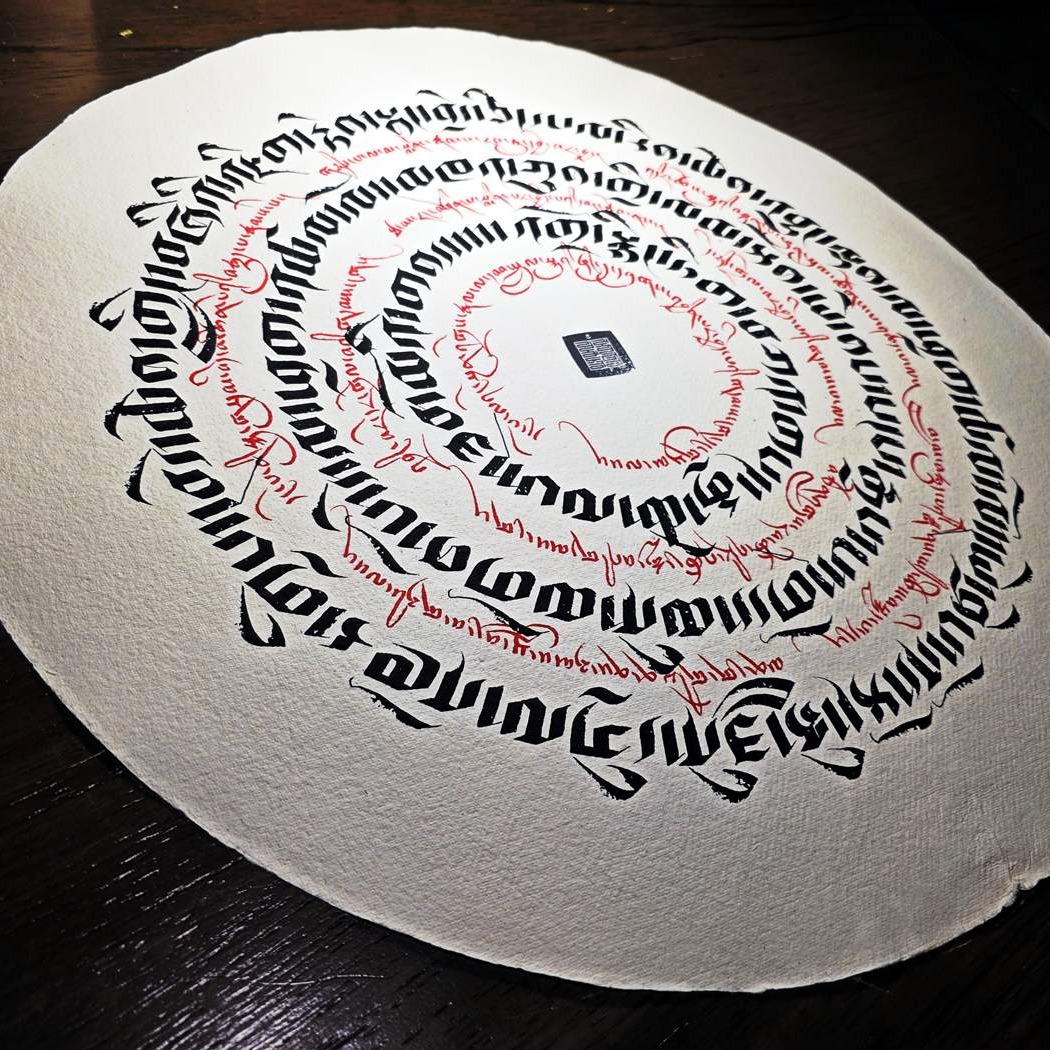
  • Cloud Banks of Non-Conceptual Space In Cloud Banks of Non-Conceptual Space, the great Dzogchen master Longchenpa explores the primordial nature of mind and the path to recognizing its inherent freedom. Through teachings on view, meditation, conduct, and fruition, he reveals awareness as naturally luminous, empty, and beyond conceptual elaboration. Rather than striving to attain enlightenment, practitioners are encouraged to rest effortlessly in the uncontrived nature of their own awareness. Thoughts and appearances arise and dissolve without leaving a trace, like clouds passing through an open sky. I’ve used a round, Khadi Rag Paper made in Karnataka, South India from 100% cotton rag. The cotton rag they use comes from T-shirt cuttings, a reliable source of pure woven cotton. #tibetancalligraphy #tibetanlanguage #buddhism #calligraphyart #calligraphy #tibet #dharma #buddhadharma
  • This piece features a portion of Analysis of the Profound, by the great Dzogchen master Longchen Rabjam (1308–1364). This text explores the ultimate nature of reality through the profound wisdom of the Great Perfection. Drawing upon the Buddhist understanding of emptiness, dependent origination, and nonduality, Longchenpa illuminates the inseparability of appearance and emptiness, revealing how all phenomena arise without possessing inherent existence. His analysis transcends intellectual speculation, pointing instead toward direct recognition of the mind's primordial nature. Through penetrating philosophical insight and contemplative wisdom, the text guides practitioners beyond conceptual elaboration toward the realization of luminous awareness, naturally free from fixation, grasping, and dualistic perception. I've used a round, Khadi Rag Paper made in Karnataka, South India from 100% cotton rag. The cotton rag they use comes from T-shirt cuttings, a reliable source of pure woven cotton. Size: 22" x 22" https://sambhotastudio.com/product/analysis-of-the-profound-22x22in/ #tibetancalligraphy #tibetanlanguage #buddhism #calligraphyart #calligraphy #tibet #dharma #buddhadharma
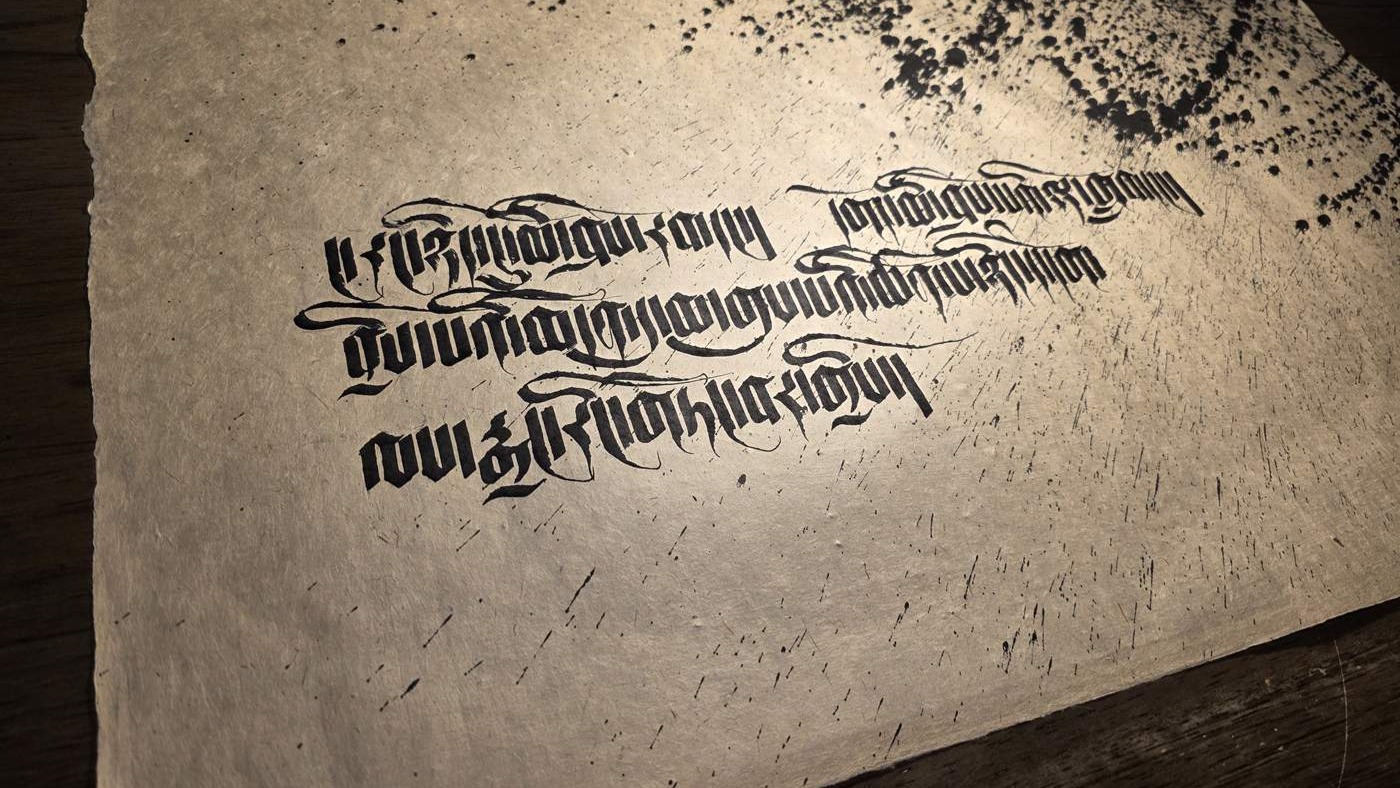
  • The Seed of Reasoning: Notes on the Five Great Logical Arguments of the Middle Way is a short but philosophically substantial work by Jamyang Khyentse Wangpo (1820-1892), one of the great masters of the Tibetan Rimé movement. The text presents five classical Madhyamaka arguments used to establish emptiness (śūnyatā) through logical reasoning. I’ve chosen traditional Bhutanese paper made from the inner bark of the Daphne shrub.
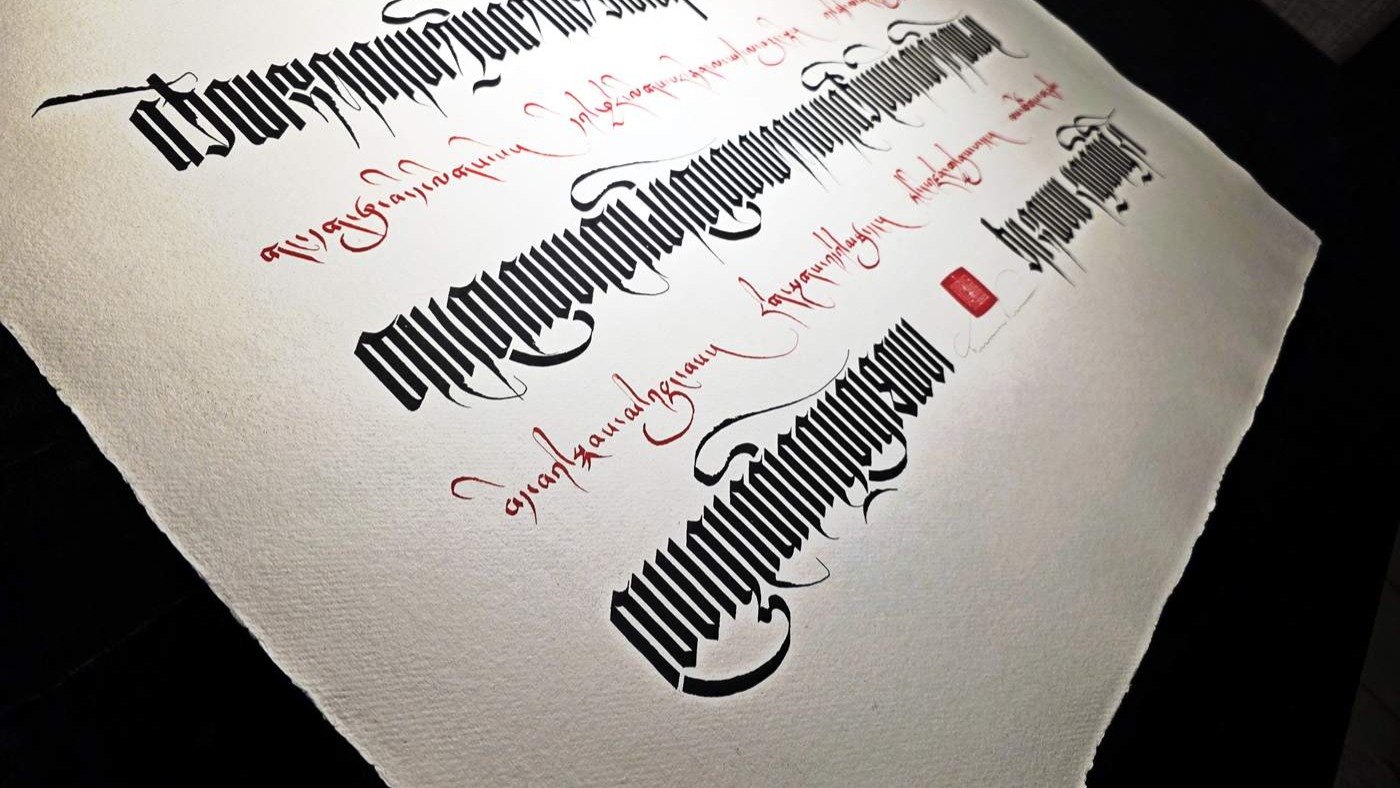
  • “Keep me away from the wisdom which does not cry, the philosophy which does not laugh and the greatness which does not bow before children.” – Khalil Gibran In these words, Khalil Gibran reminds us that true wisdom is inseparable from compassion, joy, and humility. Knowledge without feeling is hollow, philosophy without laughter lacks humanity, and greatness without tenderness is merely pride. Genuine wisdom embraces the fullness of life, honoring both its sorrows and its innocence. Size: 30″ x 20″ https://sambhotastudio.com/product/keep-me-away-from-the-wisdom-which-does-not-cry-30x20in/ #tibetancalligraphy #tibetanlanguage #buddhism #calligraphyart #calligraphy #tibet #dharma #buddhadharma
  • Vanquishing Constraints of Body, Speech and Mind The Dhāraṇī “Vanquishing Constraints of Body, Speech and Mind” is a Buddhist protective and purifying prayer concerned with overcoming the obstacles that bind our physical actions, speech, and mind. These three body, speech, and mind represent the entirety of how we experience and engage with the world. Through the recitation and contemplation of the dhāraṇī, harmful influences, obscurations, and conditions that restrict these three aspects of being are pacified. Its deeper meaning points beyond protection alone: by freeing body, speech, and mind from their habitual constraints, the practitioner creates the conditions for clarity, wholesome action, and the unfolding of awakened awareness. #tibetancalligraphy #tibetanlanguage #buddhism #calligraphyart #calligraphy #tibet #dharma #buddhadharma https://sambhotastudio.com/product/vanquishing-constraints-of-body-speech-and-mind-30x20in/
  • “Think not you can direct the course of love, for love, if it finds you worthy, directs your course.” – Khalil Gibran This quote is from Khalil Gibran’s book The Prophet. That book made a really big impression on me and it remains one of my all-time faves to this day. This quote really stood out to me for its layered meanings. I mostly focus on Buddhist texts and passages in my calligraphy pieces. But some quotes are so poignant and profound that you’ll see them make their way to my collection. This is one. https://sambhotastudio.com/product/think-not-you-can-direct-the-course-of-love-30x22in/
  • This piece features an extract of The Clarifying Light: A Prophecy of the Future from the Words of the Buddha compiled by Jamyang Khyentse Chökyi Lodrö It has garnered considerable attention, not least because the translator ascribes the foretold events to the not-too-distant future, specifically the period from 2026 to 2032. A connection has also been made between this text and the coronavirus, as if the pandemic might have been a precursor of more severe misfortune that is yet to arise. #tibetancalligraphy #tibetanlanguage #buddhism #calligraphyart #calligraphy #tibet #dharma #buddhadharma
  • This piece features an extract of The Clarifying Light: A Prophecy of the Future from the Words of the Buddha compiled by Jamyang Khyentse Chökyi Lodrö It has garnered considerable attention, not least because the translator ascribes the foretold events to the not-too-distant future, specifically the period from 2026 to 2032. A connection has also been made between this text and the coronavirus, as if the pandemic might have been a precursor of more severe misfortune that is yet to arise. #tibetancalligraphy #tibetanlanguage #buddhism #calligraphyart #calligraphy #tibet #dharma #buddhadharma
  • Equanimity The standard Tibetan Buddhist term for equanimity is བཏང་སྙོམས་ (commonly pronounced roughly “tang nyom”). "Tang" means “to let go,” “release,” or “leave.” "Nyom" conveys the meaning of being “even,” “balanced,” “level,” or “equalized.” So together tangnyom carries the sense of “letting things rest evenly” or “remaining even by letting go.” The mind is balanced because it does not grasp at what is pleasant or push away what is unpleasant. Equanimity allows us to meet experience without clinging to what we want or resisting what we dislike, recognizing that all conditions are impermanent and continually changing. https://sambhotastudio.com/product/equanimity-17-in-x-11-in/ #tibetancalligraphy #tibetanlanguage #buddhism #calligraphyart #calligraphy #tibet #dharma #buddhadharma
Cloud Banks of Non-Conceptual Space In Cloud Banks of Non-Conceptual Space, the great Dzogchen master Longchenpa explores the primordial nature of mind and the path to recognizing its inherent freedom. Through teachings on view, meditation, conduct, and fruition, he reveals awareness as naturally luminous, empty, and beyond conceptual elaboration. Rather than striving to attain enlightenment, practitioners are encouraged to rest effortlessly in the uncontrived nature of their own awareness. Thoughts and appearances arise and dissolve without leaving a trace, like clouds passing through an open sky. I’ve used a round, Khadi Rag Paper made in Karnataka, South India from 100% cotton rag. The cotton rag they use comes from T-shirt cuttings, a reliable source of pure woven cotton. #tibetancalligraphy #tibetanlanguage #buddhism #calligraphyart #calligraphy #tibet #dharma #buddhadharma
2 days ago
View on Instagram |
1/9
This piece features a portion of Analysis of the Profound, by the great Dzogchen master Longchen Rabjam (1308–1364). This text explores the ultimate nature of reality through the profound wisdom of the Great Perfection. Drawing upon the Buddhist understanding of emptiness, dependent origination, and nonduality, Longchenpa illuminates the inseparability of appearance and emptiness, revealing how all phenomena arise without possessing inherent existence. His analysis transcends intellectual speculation, pointing instead toward direct recognition of the mind's primordial nature. Through penetrating philosophical insight and contemplative wisdom, the text guides practitioners beyond conceptual elaboration toward the realization of luminous awareness, naturally free from fixation, grasping, and dualistic perception. I've used a round, Khadi Rag Paper made in Karnataka, South India from 100% cotton rag. The cotton rag they use comes from T-shirt cuttings, a reliable source of pure woven cotton. Size: 22" x 22" https://sambhotastudio.com/product/analysis-of-the-profound-22x22in/ #tibetancalligraphy #tibetanlanguage #buddhism #calligraphyart #calligraphy #tibet #dharma #buddhadharma
5 days ago
View on Instagram |
2/9
The Seed of Reasoning: Notes on the Five Great Logical Arguments of the Middle Way is a short but philosophically substantial work by Jamyang Khyentse Wangpo (1820-1892), one of the great masters of the Tibetan Rimé movement. The text presents five classical Madhyamaka arguments used to establish emptiness (śūnyatā) through logical reasoning. I’ve chosen traditional Bhutanese paper made from the inner bark of the Daphne shrub.
1 week ago
View on Instagram |
3/9
“Keep me away from the wisdom which does not cry, the philosophy which does not laugh and the greatness which does not bow before children.” – Khalil Gibran In these words, Khalil Gibran reminds us that true wisdom is inseparable from compassion, joy, and humility. Knowledge without feeling is hollow, philosophy without laughter lacks humanity, and greatness without tenderness is merely pride. Genuine wisdom embraces the fullness of life, honoring both its sorrows and its innocence. Size: 30″ x 20″ https://sambhotastudio.com/product/keep-me-away-from-the-wisdom-which-does-not-cry-30x20in/ #tibetancalligraphy #tibetanlanguage #buddhism #calligraphyart #calligraphy #tibet #dharma #buddhadharma
4 weeks ago
View on Instagram |
4/9
Vanquishing Constraints of Body, Speech and Mind The Dhāraṇī “Vanquishing Constraints of Body, Speech and Mind” is a Buddhist protective and purifying prayer concerned with overcoming the obstacles that bind our physical actions, speech, and mind. These three body, speech, and mind represent the entirety of how we experience and engage with the world. Through the recitation and contemplation of the dhāraṇī, harmful influences, obscurations, and conditions that restrict these three aspects of being are pacified. Its deeper meaning points beyond protection alone: by freeing body, speech, and mind from their habitual constraints, the practitioner creates the conditions for clarity, wholesome action, and the unfolding of awakened awareness. #tibetancalligraphy #tibetanlanguage #buddhism #calligraphyart #calligraphy #tibet #dharma #buddhadharma https://sambhotastudio.com/product/vanquishing-constraints-of-body-speech-and-mind-30x20in/
1 month ago
View on Instagram |
5/9
“Think not you can direct the course of love, for love, if it finds you worthy, directs your course.” – Khalil Gibran This quote is from Khalil Gibran’s book The Prophet. That book made a really big impression on me and it remains one of my all-time faves to this day. This quote really stood out to me for its layered meanings. I mostly focus on Buddhist texts and passages in my calligraphy pieces. But some quotes are so poignant and profound that you’ll see them make their way to my collection. This is one. https://sambhotastudio.com/product/think-not-you-can-direct-the-course-of-love-30x22in/
1 month ago
View on Instagram |
6/9
This piece features an extract of The Clarifying Light: A Prophecy of the Future from the Words of the Buddha compiled by Jamyang Khyentse Chökyi Lodrö It has garnered considerable attention, not least because the translator ascribes the foretold events to the not-too-distant future, specifically the period from 2026 to 2032. A connection has also been made between this text and the coronavirus, as if the pandemic might have been a precursor of more severe misfortune that is yet to arise. #tibetancalligraphy #tibetanlanguage #buddhism #calligraphyart #calligraphy #tibet #dharma #buddhadharma
1 month ago
View on Instagram |
7/9
This piece features an extract of The Clarifying Light: A Prophecy of the Future from the Words of the Buddha compiled by Jamyang Khyentse Chökyi Lodrö It has garnered considerable attention, not least because the translator ascribes the foretold events to the not-too-distant future, specifically the period from 2026 to 2032. A connection has also been made between this text and the coronavirus, as if the pandemic might have been a precursor of more severe misfortune that is yet to arise. #tibetancalligraphy #tibetanlanguage #buddhism #calligraphyart #calligraphy #tibet #dharma #buddhadharma
2 months ago
View on Instagram |
8/9
Equanimity The standard Tibetan Buddhist term for equanimity is བཏང་སྙོམས་ (commonly pronounced roughly “tang nyom”). "Tang" means “to let go,” “release,” or “leave.” "Nyom" conveys the meaning of being “even,” “balanced,” “level,” or “equalized.” So together tangnyom carries the sense of “letting things rest evenly” or “remaining even by letting go.” The mind is balanced because it does not grasp at what is pleasant or push away what is unpleasant. Equanimity allows us to meet experience without clinging to what we want or resisting what we dislike, recognizing that all conditions are impermanent and continually changing. https://sambhotastudio.com/product/equanimity-17-in-x-11-in/ #tibetancalligraphy #tibetanlanguage #buddhism #calligraphyart #calligraphy #tibet #dharma #buddhadharma
2 months ago
View on Instagram |
9/9