

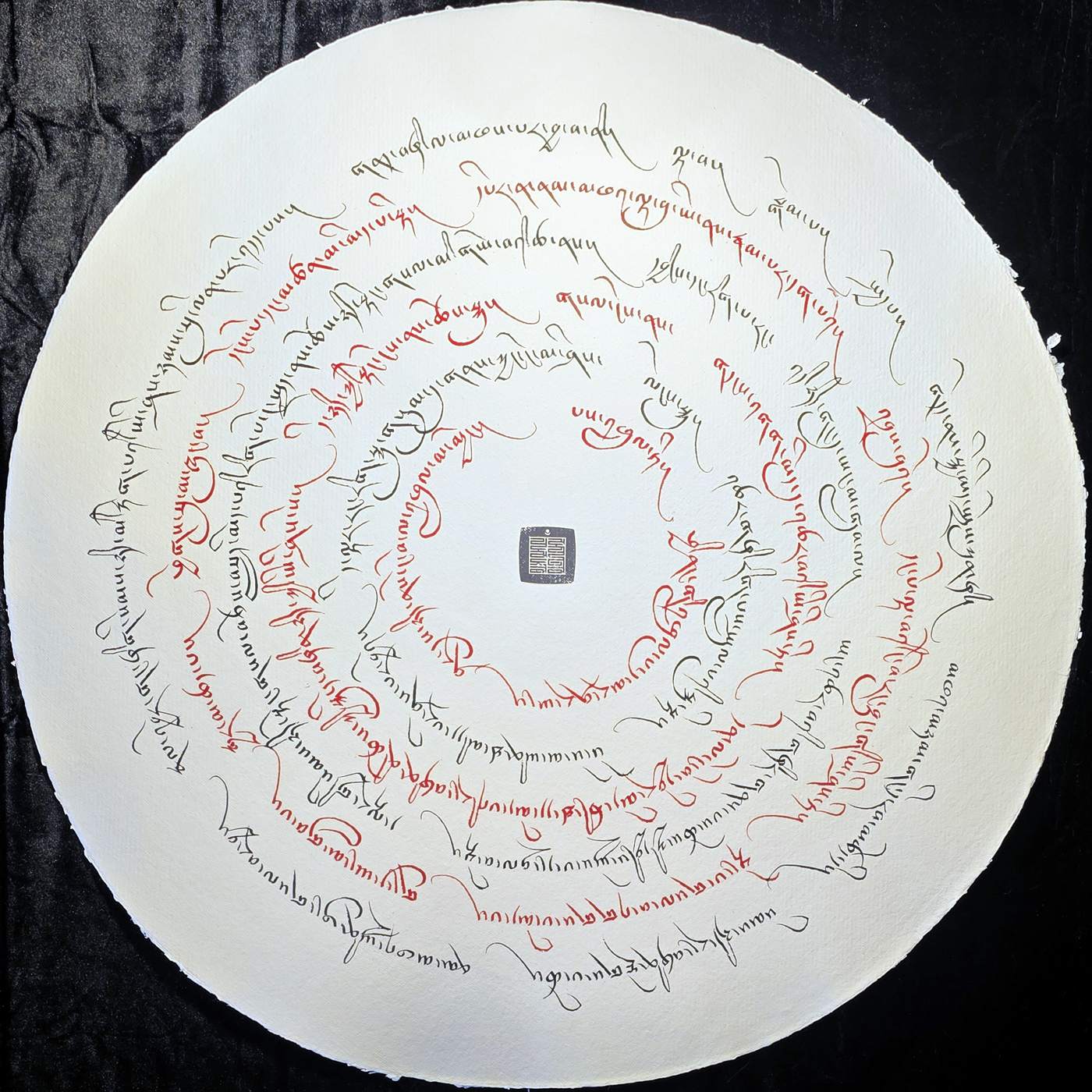

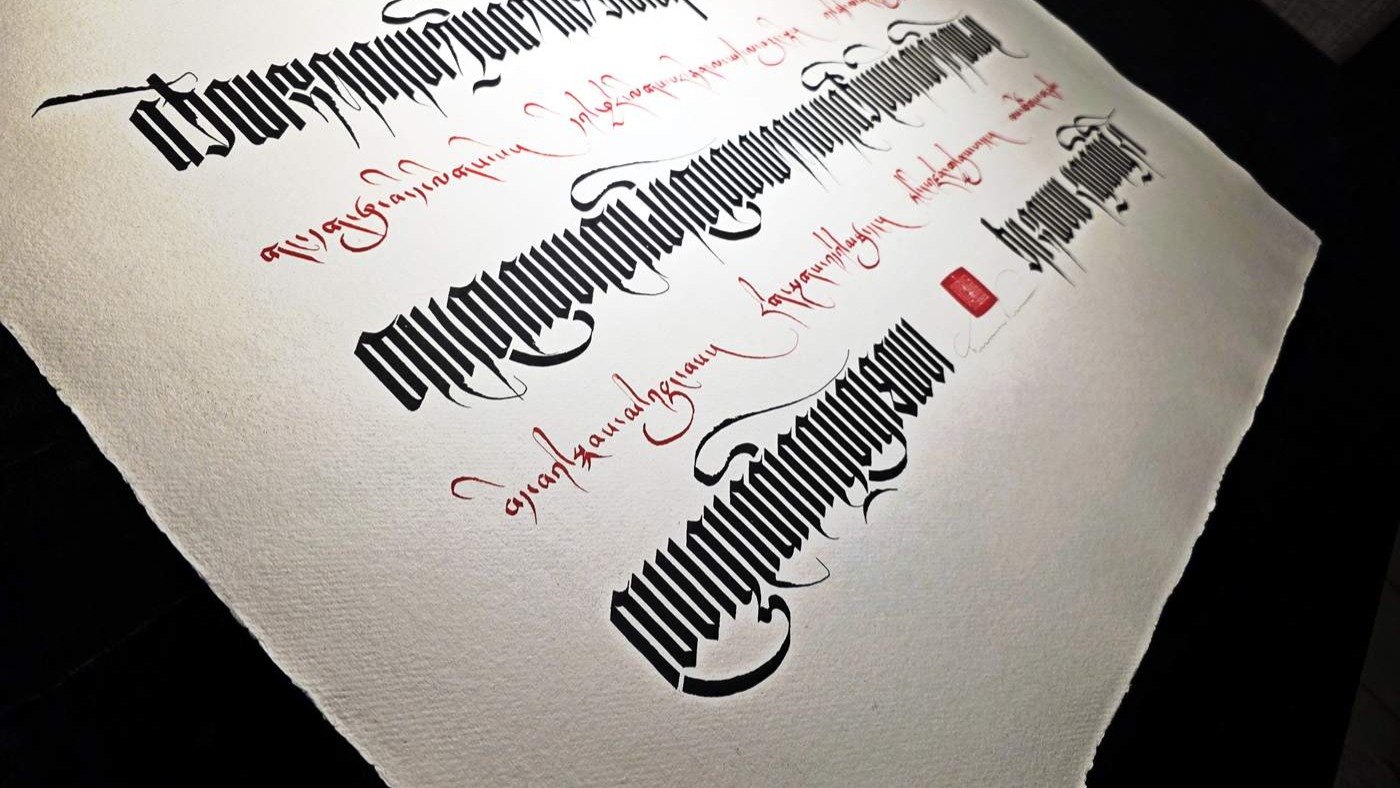
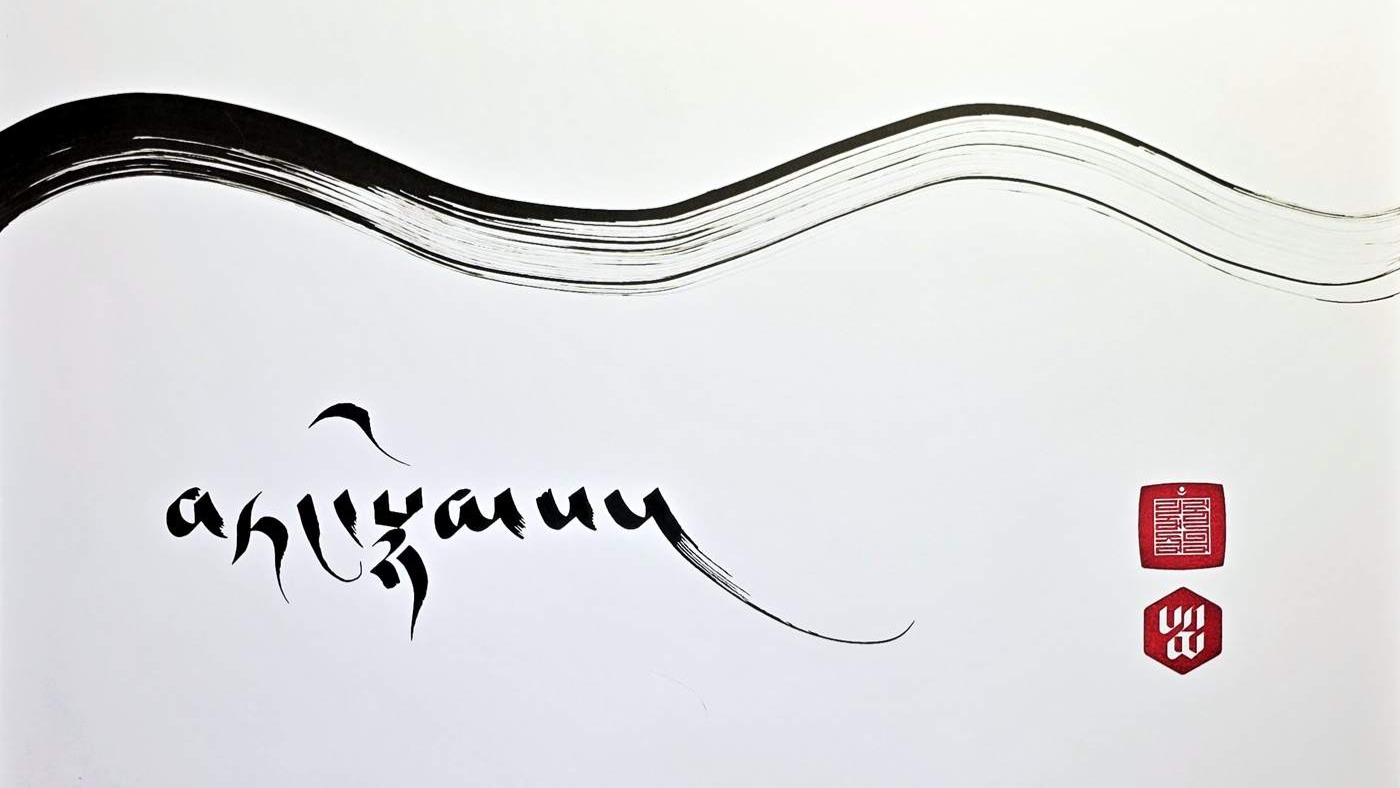


Cloud Banks of Non-Conceptual Space In Cloud Banks of Non-Conceptual Space, the great Dzogchen master Longchenpa explores the primordial nature of mind and the path to recognizing its inherent freedom. Through teachings on view, meditation, conduct, and fruition, he reveals awareness as naturally luminous, empty, and beyond conceptual elaboration. Rather than striving to attain enlightenment, practitioners are encouraged to rest effortlessly in the uncontrived nature of their own awareness. Thoughts and appearances arise and dissolve without leaving a trace, like clouds passing through an open sky. I’ve used a round, Khadi Rag Paper made in Karnataka, South India from 100% cotton rag. The cotton rag they use comes from T-shirt cuttings, a reliable source of pure woven cotton. #tibetancalligraphy #tibetanlanguage #buddhism #calligraphyart #calligraphy #tibet #dharma #buddhadharma
2 days ago


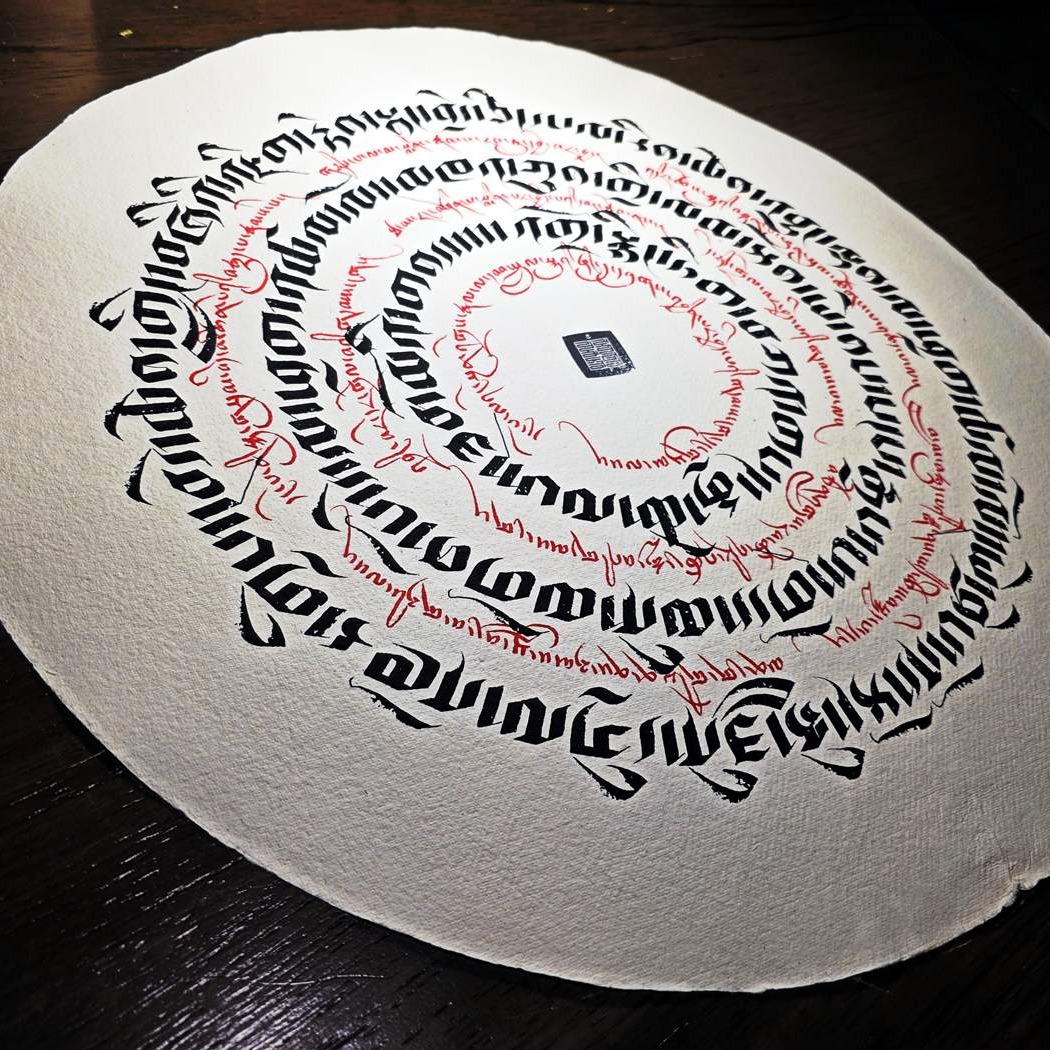
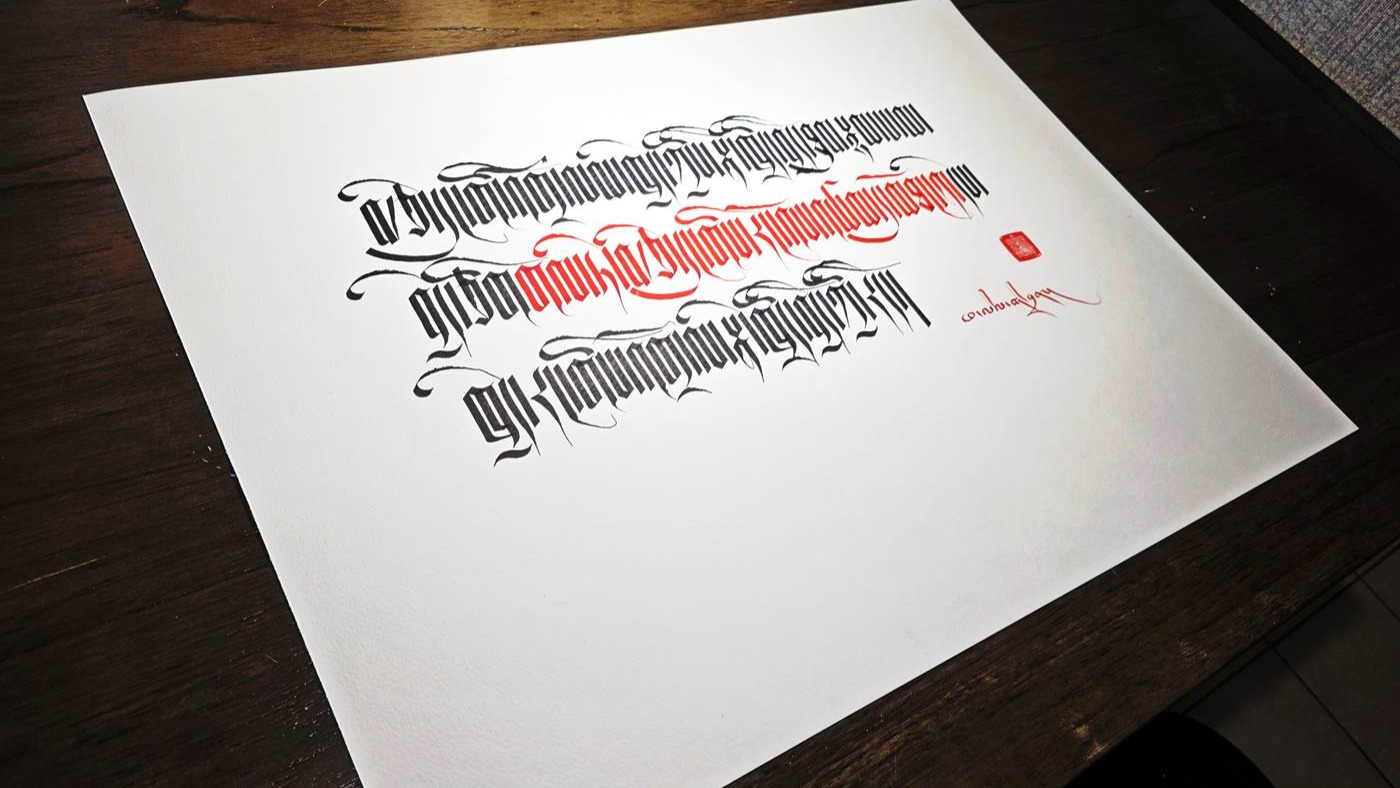
This piece features a portion of Analysis of the Profound, by the great Dzogchen master Longchen Rabjam (1308–1364). This text explores the ultimate nature of reality through the profound wisdom of the Great Perfection. Drawing upon the Buddhist understanding of emptiness, dependent origination, and nonduality, Longchenpa illuminates the inseparability of appearance and emptiness, revealing how all phenomena arise without possessing inherent existence. His analysis transcends intellectual speculation, pointing instead toward direct recognition of the mind's primordial nature. Through penetrating philosophical insight and contemplative wisdom, the text guides practitioners beyond conceptual elaboration toward the realization of luminous awareness, naturally free from fixation, grasping, and dualistic perception. I've used a round, Khadi Rag Paper made in Karnataka, South India from 100% cotton rag. The cotton rag they use comes from T-shirt cuttings, a reliable source of pure woven cotton. Size: 22" x 22" https://sambhotastudio.com/product/analysis-of-the-profound-22x22in/ #tibetancalligraphy #tibetanlanguage #buddhism #calligraphyart #calligraphy #tibet #dharma #buddhadharma
5 days ago


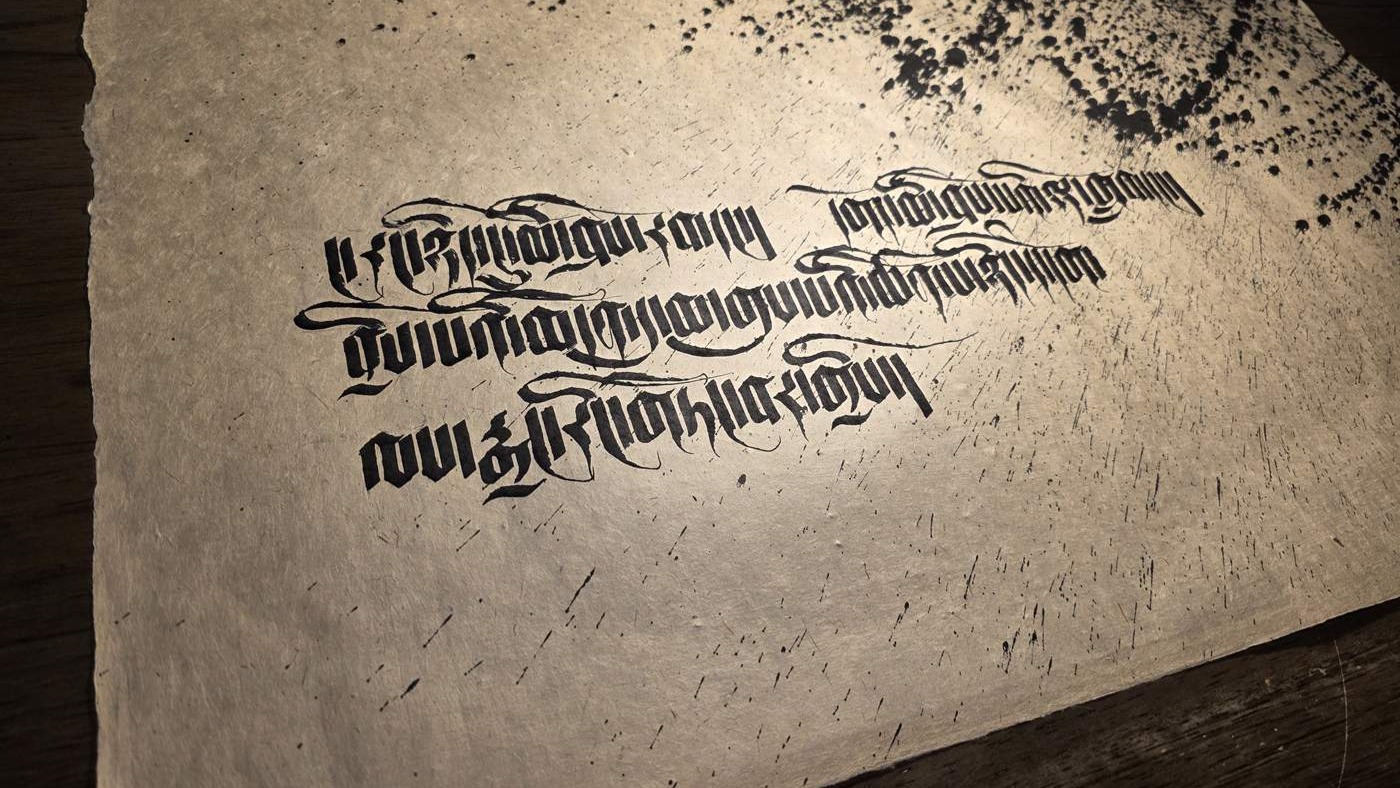
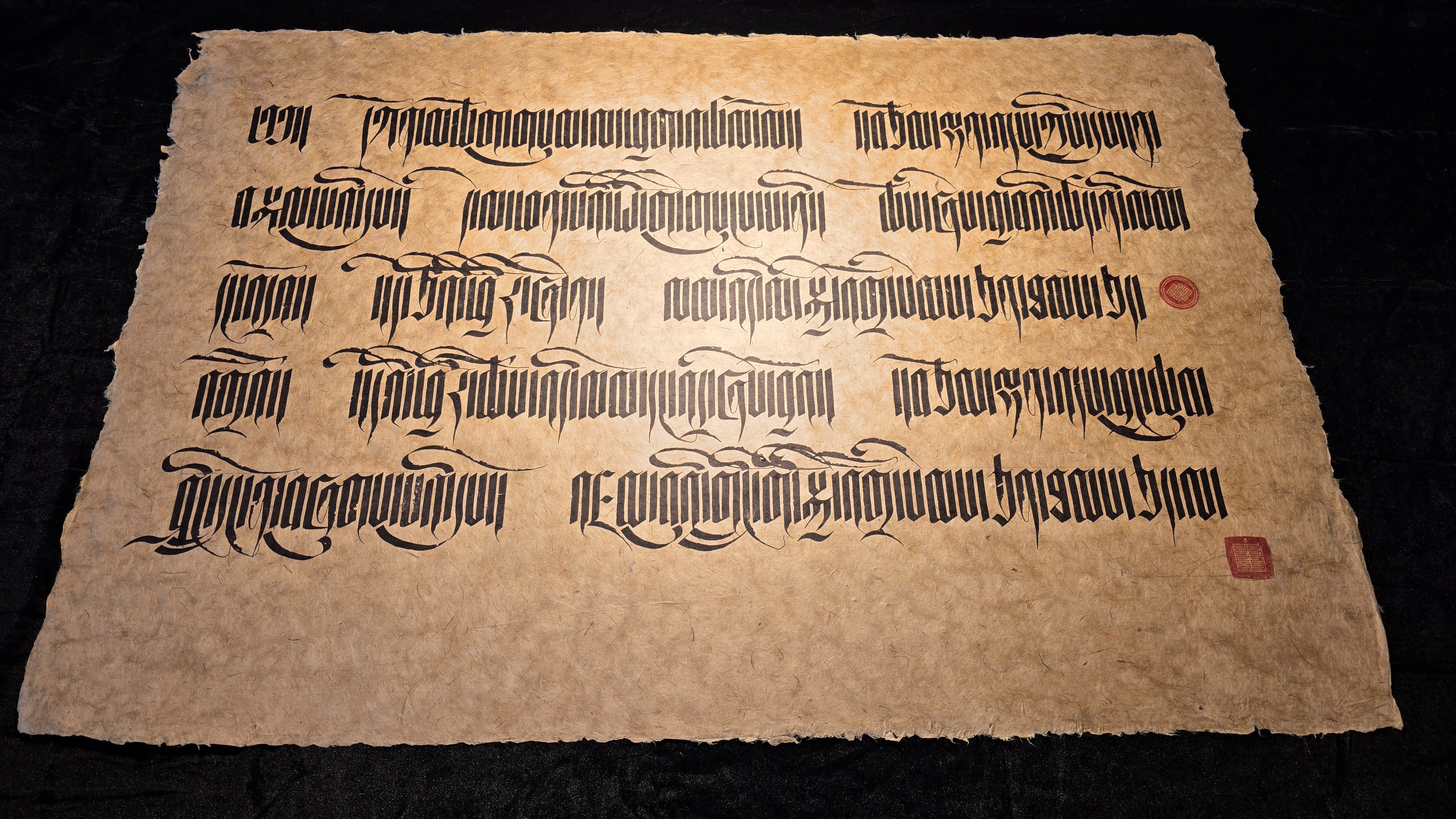
The Seed of Reasoning: Notes on the Five Great Logical Arguments of the Middle Way is a short but philosophically substantial work by Jamyang Khyentse Wangpo (1820-1892), one of the great masters of the Tibetan Rimé movement. The text presents five classical Madhyamaka arguments used to establish emptiness (śūnyatā) through logical reasoning. I’ve chosen traditional Bhutanese paper made from the inner bark of the Daphne shrub.
1 week ago


“Keep me away from the wisdom which does not cry, the philosophy which does not laugh and the greatness which does not bow before children.” – Khalil Gibran In these words, Khalil Gibran reminds us that true wisdom is inseparable from compassion, joy, and humility. Knowledge without feeling is hollow, philosophy without laughter lacks humanity, and greatness without tenderness is merely pride. Genuine wisdom embraces the fullness of life, honoring both its sorrows and its innocence. Size: 30″ x 20″ https://sambhotastudio.com/product/keep-me-away-from-the-wisdom-which-does-not-cry-30x20in/ #tibetancalligraphy #tibetanlanguage #buddhism #calligraphyart #calligraphy #tibet #dharma #buddhadharma
4 weeks ago


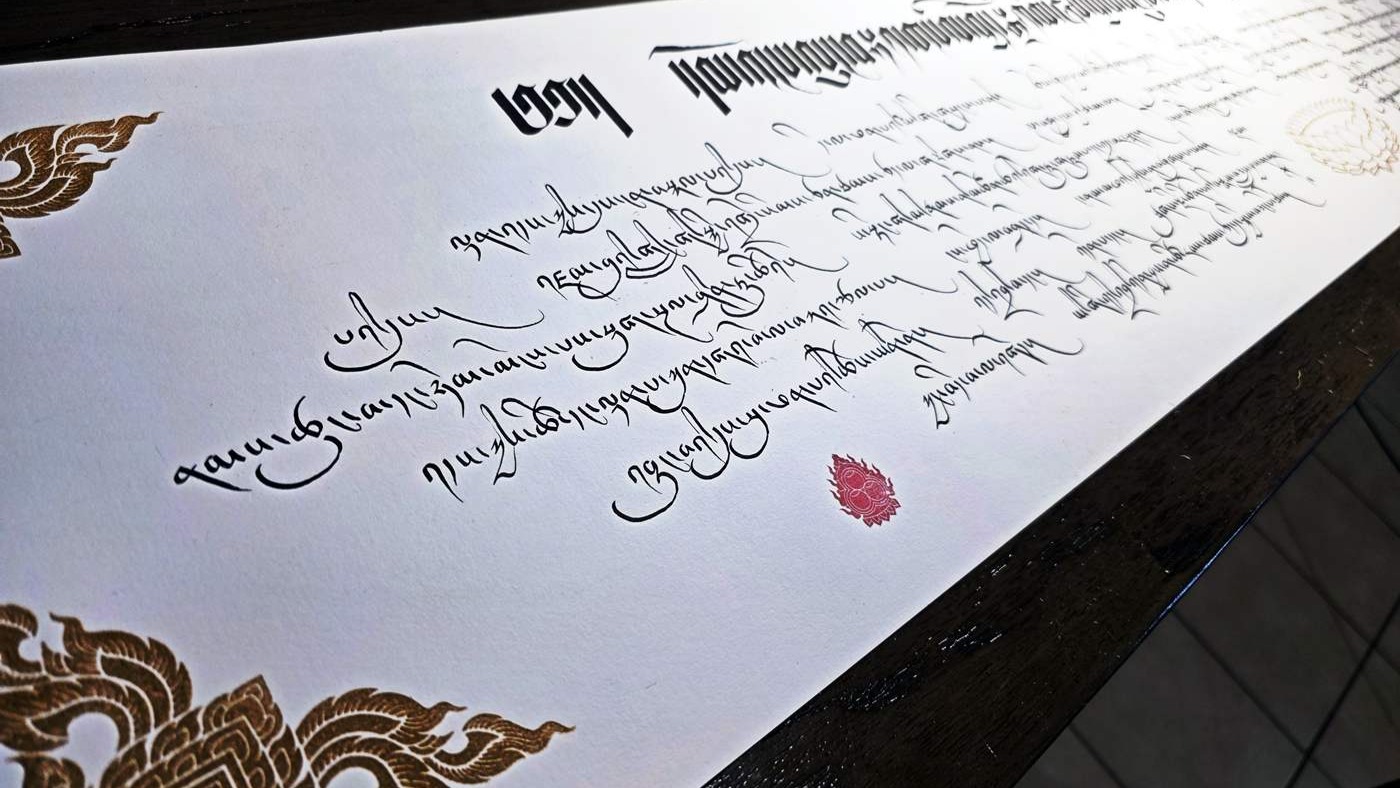
Vanquishing Constraints of Body, Speech and Mind The Dhāraṇī “Vanquishing Constraints of Body, Speech and Mind” is a Buddhist protective and purifying prayer concerned with overcoming the obstacles that bind our physical actions, speech, and mind. These three body, speech, and mind represent the entirety of how we experience and engage with the world. Through the recitation and contemplation of the dhāraṇī, harmful influences, obscurations, and conditions that restrict these three aspects of being are pacified. Its deeper meaning points beyond protection alone: by freeing body, speech, and mind from their habitual constraints, the practitioner creates the conditions for clarity, wholesome action, and the unfolding of awakened awareness. #tibetancalligraphy #tibetanlanguage #buddhism #calligraphyart #calligraphy #tibet #dharma #buddhadharma https://sambhotastudio.com/product/vanquishing-constraints-of-body-speech-and-mind-30x20in/
1 month ago


“Think not you can direct the course of love, for love, if it finds you worthy, directs your course.” – Khalil Gibran This quote is from Khalil Gibran’s book The Prophet. That book made a really big impression on me and it remains one of my all-time faves to this day. This quote really stood out to me for its layered meanings. I mostly focus on Buddhist texts and passages in my calligraphy pieces. But some quotes are so poignant and profound that you’ll see them make their way to my collection. This is one. https://sambhotastudio.com/product/think-not-you-can-direct-the-course-of-love-30x22in/
1 month ago


This piece features an extract of The Clarifying Light: A Prophecy of the Future from the Words of the Buddha compiled by Jamyang Khyentse Chökyi Lodrö It has garnered considerable attention, not least because the translator ascribes the foretold events to the not-too-distant future, specifically the period from 2026 to 2032. A connection has also been made between this text and the coronavirus, as if the pandemic might have been a precursor of more severe misfortune that is yet to arise. #tibetancalligraphy #tibetanlanguage #buddhism #calligraphyart #calligraphy #tibet #dharma #buddhadharma
2 months ago


Equanimity The standard Tibetan Buddhist term for equanimity is བཏང་སྙོམས་ (commonly pronounced roughly “tang nyom”). "Tang" means “to let go,” “release,” or “leave.” "Nyom" conveys the meaning of being “even,” “balanced,” “level,” or “equalized.” So together tangnyom carries the sense of “letting things rest evenly” or “remaining even by letting go.” The mind is balanced because it does not grasp at what is pleasant or push away what is unpleasant. Equanimity allows us to meet experience without clinging to what we want or resisting what we dislike, recognizing that all conditions are impermanent and continually changing. https://sambhotastudio.com/product/equanimity-17-in-x-11-in/ #tibetancalligraphy #tibetanlanguage #buddhism #calligraphyart #calligraphy #tibet #dharma #buddhadharma
2 months ago